
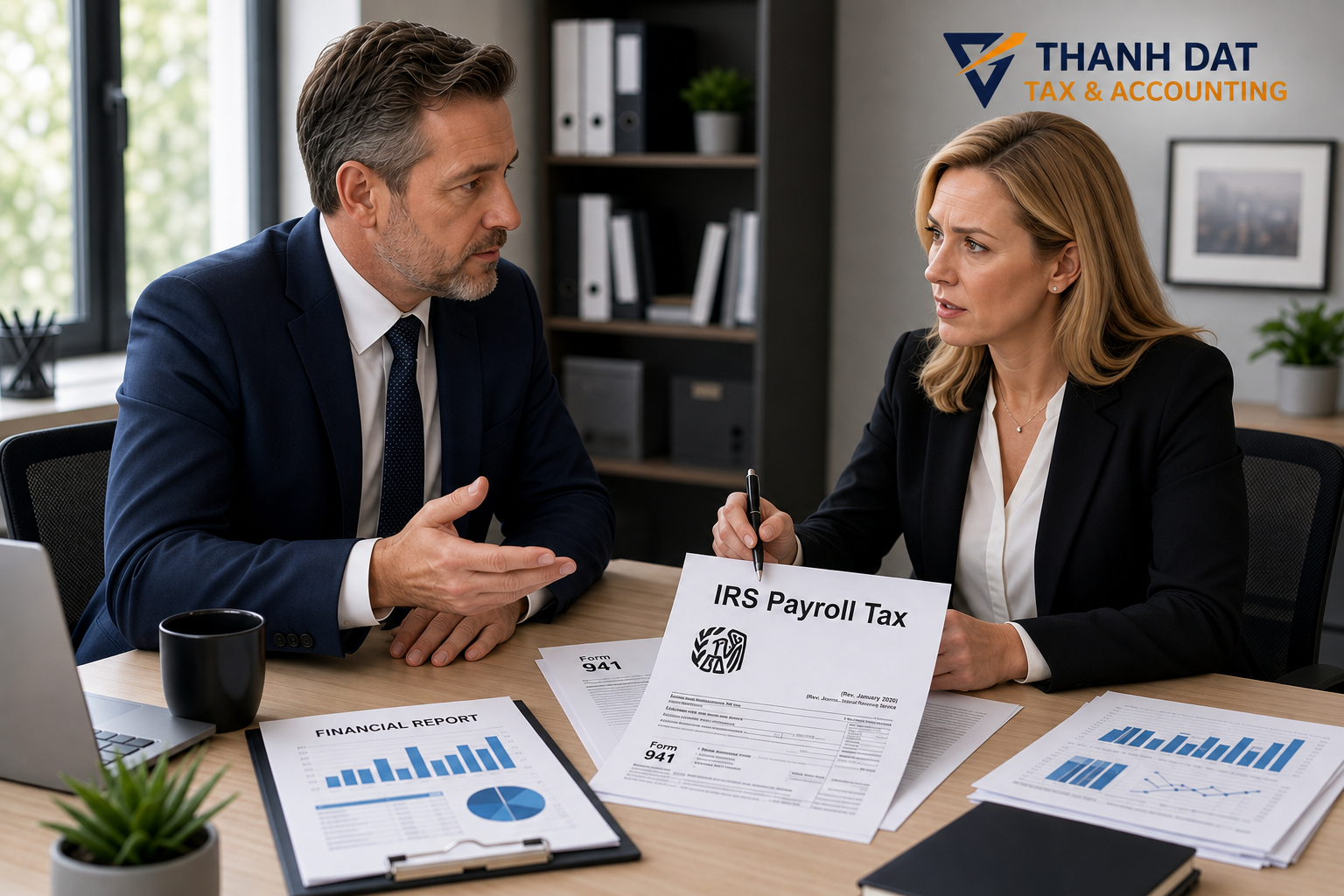

Operating a business comes with severe federal tax responsibilities, none more strictly enforced than employment tax obligations. When a business falls behind on withholding employee taxes, the federal government acts swiftly to recover unpaid liabilities. Resolving disputes over employment taxes requires a strategic approach and immediate technical intervention. Seeking professional IRS Audit help at the earliest sign of a dispute is critical to protect your business operations and safeguard business owners from personal financial liability.
1. Essential Fundamentals of Employment Tax Compliance and Audits
Understanding how employment tax liabilities accrue is the first step toward managing an active federal dispute:
- Fulfilling Quarterly Reporting Obligations: Businesses must accurately report employee wages and withheld income taxes on quarterly 941 filings to ensure tax credits align with federal deposits.
- Managing Trust Fund Tax Obligations: Amounts withheld from employee paychecks for income tax and Social Security are held in trust for the government; mismanaging these funds triggers severe regulatory actions.
- Identifying Triggers for a Payroll Audit: Common triggers for an intensive payroll audit include persistent late filings, discrepancies between annual W-2 forms and quarterly returns, or misclassifying workers as independent contractors.
- Monitoring Automated IRS Notice Sequences: Unresolved payroll discrepancies escalate rapidly from informational inquiry letters to urgent notices of intent to levy business bank accounts.
2. Key Federal Resolution Mechanisms for Payroll Disputes
The IRS provides specific legal resolution channels to resolve employment tax balances based on your company’s financial viability:
- In-Business Trust Fund Express Installment Agreements: Allows small businesses with back payroll taxes to establish structured monthly payment plans without submitting extensive financial statements, provided the debt remains under statutory thresholds.
- Offer in Compromise for Operating Businesses: In rare cases of severe financial hardship, a business can settle employment tax debts for less than the full balance owed, provided all current 941 filings and deposits remain fully compliant.
- Worker Reclassification Relief Programs: Eligible businesses facing misclassification audits can apply for voluntary classification settlement programs to resolve past employment tax liabilities at a reduced cost.
- Penalty Abatement Based on Reasonable Cause: Businesses can request the removal of harsh failure-to-deposit penalties if employment tax defaults resulted from unavoidable disasters, serious illness, or reliance on erroneous expert advice.
3. Personal Financial Risks and the Trust Fund Recovery Penalty
Unresolved employment tax disputes carry a unique danger that distinguishes them from corporate income tax debts:
- Understanding Personal Liability Exposure: The IRS has the legal authority to bypass corporate veil protections to collect unpaid trust fund taxes directly from responsible individuals.
- Assessment of the Trust Fund Recovery Penalty: Revenue officers actively investigate corporate officers, directors, and payroll managers to assess a personal Trust fund recovery penalty, making them personally liable for 100% of the unpaid withheld taxes.
- Identifying Responsible and Willful Conduct: Liability requires proving that an individual was responsible for managing business funds and willfully chose to pay other creditors, such as vendors or rent, instead of the IRS.

4. Strategic Advantages of Securing Expert IRS Audit Help
Partnering with a credentialed tax professional-such as an Enrolled Agent, CPA, or tax attorney-provides critical safeguards during employment tax disputes:
- Intervention During Investigation Interviews: Professional representation prevents business owners from making damaging statements during Form 4180 interviews, which revenue agents use to assign personal penalty liability.
- Correction and Reconciliation of Tax Returns: Specialists conduct thorough internal audits to correct erroneous 941 filings, ensuring actual tax liabilities reflect true payroll numbers rather than arbitrary IRS estimations.
- Negotiation of Business Settlement Agreements: Enlisting expert IRS Audit help ensures that payment agreements or settlement offers are structured to protect daily cash flow and keep business operations running smoothly.
Conclusion
The small business tax deductions and credits 2026 provide powerful opportunities to reduce your tax burden and improve financial efficiency. With proper planning, accurate tracking, and expert guidance, you can maximize every available benefit.
👉 Contact Thanh Dat Tax today to make the most of your small business tax deductions and credits 2026 and start saving with confidence.
Thanh Dat Tax & Accounting – Professional Tax & Accounting Services
📍 2520 Beacon Ave S, Seattle, WA 98144.
📞 Phone: 206 483 9729
📧 Email: info@thanhdattax.com