


Businesses seeking to lower operating costs and strengthen their tax position increasingly turn to clean energy incentives. Effective tax planning incorporates available federal and state credits to reduce taxable income while supporting sustainability goals. Key opportunities include the solar tax credit, EV tax credit, and incentives tied to energy efficiency upgrades. When these credits are identified and claimed correctly, companies can improve cash flow, accelerate equipment payback periods, and demonstrate environmental responsibility without sacrificing financial performance.
1. Integrating Green Energy Incentives into Overall Tax Planning
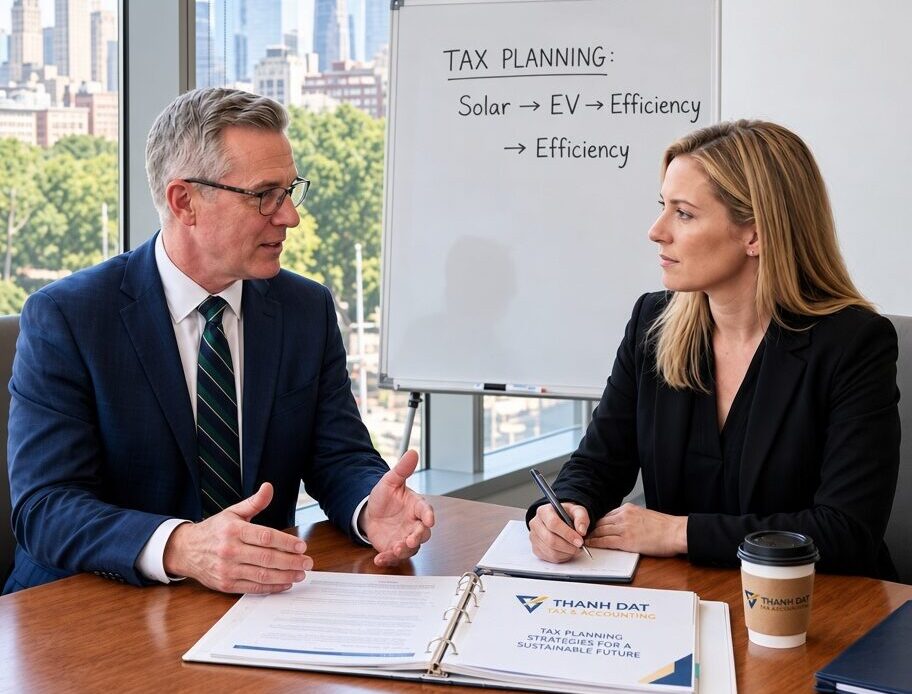
A tax strategy that overlooks green energy credits leaves significant value on the table. Businesses should begin by inventorying current energy use, planned capital expenditures, and facility improvement projects. Mapping these activities against available incentives reveals which investments qualify for the solar tax credit, EV tax credit, or energy efficiency deductions. Early coordination between finance, operations, and tax advisors ensures that project timing, documentation, and ownership structures maximize credit eligibility. A proactive approach converts what might otherwise be ordinary capital spending into tax-advantaged investments that deliver both operational savings and direct tax reduction. Reviewing these opportunities during annual budgeting cycles further strengthens the connection between sustainability goals and measurable tax outcomes.
2. Capturing Value from the Solar Tax Credit
The solar tax credit remains one of the most substantial incentives available to businesses installing photovoltaic systems. Qualifying projects can claim a percentage of eligible costs, including panels, inverters, mounting equipment, and certain labor expenses. Proper tax management requires careful tracking of placed-in-service dates, basis calculations, and any applicable adders for domestic content or energy community locations. Businesses that own the system outright generally claim the credit directly, while those using third-party ownership models must evaluate pass-through or lease structures. Combining the solar tax credit with accelerated depreciation further improves project economics and shortens the path to positive cash flow. Maintaining detailed records from the design phase through installation also supports stronger audit defense if the credit is later examined.
3. Leveraging the EV Tax Credit and Related Fleet Incentives
Companies transitioning to electric vehicles can benefit from the EV tax credit and complementary commercial clean vehicle incentives. Eligible purchases of qualified electric or plug-in hybrid vehicles may generate credits that directly offset tax liability. Tax optimization for fleet electrification involves assessing vehicle eligibility, purchase timing, and the interaction between the credit and other deductions such as Section 179 or bonus depreciation. Businesses should also consider charging infrastructure incentives, which can further reduce the net cost of supporting an electric fleet. Coordinating vehicle acquisitions with overall capital budget cycles ensures that the EV tax credit is fully utilized rather than limited by tax liability in a given year. Planning ahead for multi-year fleet replacements allows companies to spread credit claims and manage cash flow more effectively.
4. Improving Results Through Energy Efficiency Investments
Energy efficiency upgrades often qualify for deductions or credits that complement solar and EV incentives. Improvements such as high-efficiency HVAC systems, LED lighting, building envelope enhancements, and smart energy management controls can generate immediate tax benefits while permanently lowering utility expenses. Effective tax management identifies which projects meet technical requirements under current energy efficiency provisions and ensures that required certifications or measurements are obtained. When these upgrades are timed alongside larger capital projects, businesses can stack incentives and create a more comprehensive sustainability strategy that delivers measurable tax and operational returns. Ongoing monitoring of energy performance after installation helps document savings and supports future incentive claims.
Thoughtful use of green energy tax credits strengthens both the financial and environmental performance of a business. By embedding the solar tax credit, EV tax credit, and energy efficiency opportunities into regular financial planning cycles, companies reduce current tax liabilities and improve long-term cost structures. The most successful organizations treat these incentives as strategic tools rather than afterthoughts, aligning capital decisions with available credits from the earliest planning stages. Businesses that adopt this approach consistently achieve stronger after-tax results while contributing to a lower-carbon operating model and positioning themselves for continued regulatory and market advantages.
Conclusion
The small business tax deductions and credits 2026 provide powerful opportunities to reduce your tax burden and improve financial efficiency. With proper planning, accurate tracking, and expert guidance, you can maximize every available benefit.
👉 Contact Thanh Dat Tax today to make the most of your small business tax deductions and credits 2026 and start saving with confidence.
Thanh Dat Tax & Accounting – Professional Tax & Accounting Services
📍 2520 Beacon Ave S, Seattle, WA 98144.
📞 Phone: 206 483 9729
📧 Email: info@thanhdattax.com